
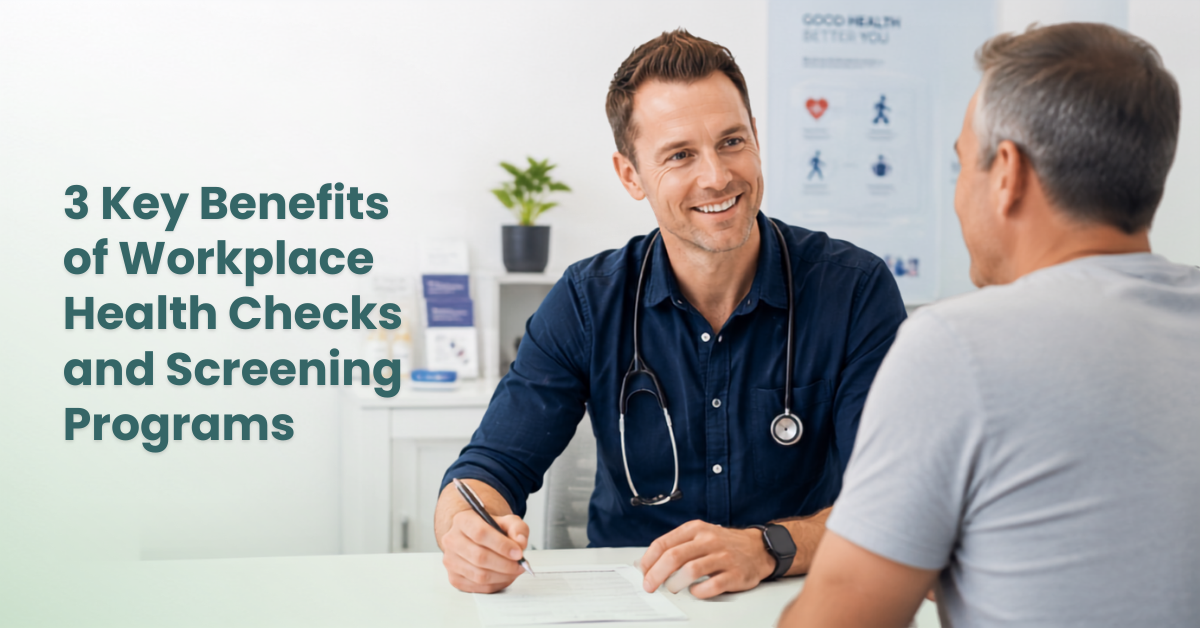
A healthy workplace is about more than responding when someone becomes unwell or injured. Depending on the type of work involved, proactive health assessments can form part of a broader approach to supporting employee wellbeing and managing workplace health risks.
Workplace health checks may include general health assessments, employment-related medicals, or specific occupational health monitoring based on a worker’s duties and potential workplace exposures.
For businesses in Botanic Ridge and surrounding areas, understanding the purpose of workplace health assessments can help employers determine which services may be relevant to their workforce.
Here are three key potential benefits of appropriately designed workplace health checks and screening programs.
1- Workplace Health Checks May Help Identify Health Concerns
Some health concerns can develop without obvious symptoms.
Depending on the purpose of the assessment, employee health screening may involve checking factors such as:
- Blood pressure
- General medical history
- Vision
- Hearing
- Respiratory health
- Musculoskeletal function
- Other health measures relevant to the person’s work
An assessment may identify a result that warrants further investigation or follow-up with the employee’s usual GP or another healthcare professional.
Importantly, workplace screening is not the same as diagnosis. Screening may identify potential concerns, while further clinical assessment may be needed to determine whether a medical condition is present.
2- Occupational Health Screening Can Support Workplace Safety
Some jobs involve specific physical demands or exposure to workplace hazards.
In these circumstances, occupational health screening or health monitoring may help employers and workers understand whether certain occupational factors are affecting a worker’s health.
Depending on the workplace, assessments may be relevant to hazards such as:
- Hazardous chemicals
- Crystalline silica
- Asbestos
- Lead
- Noise
- Respiratory hazards
- Physically demanding duties
Safe Work Australia explains that health monitoring can be required where workers face significant risks from exposure to certain hazardous chemicals. It can help identify whether exposure is affecting a worker’s health and provide information about whether existing workplace controls are effective.
Health Monitoring Does Not Replace Hazard Controls
Medical assessments should not be treated as a substitute for controlling hazards in the workplace.
Employers still need to identify hazards and eliminate or minimise risks so far as reasonably practicable.
For Victorian workplaces, employers have duties under occupational health and safety legislation to provide and maintain a working environment that is safe and without risks to health, so far as reasonably practicable.
This means workplace health assessments should form part of a broader safety approach rather than being relied upon as the only preventive measure.
3- Workplace Programs Can Encourage Greater Health Awareness
Work can take up a significant part of a person’s week, and routine healthcare can sometimes fall down the priority list.
A workplace health initiative can provide employees with an opportunity to pay attention to aspects of their health that they may not have considered recently.
Depending on the program, this may encourage conversations about:
- Cardiovascular health
- Blood pressure
- Hearing and vision
- Respiratory health
- Mental wellbeing
- Lifestyle factors
- Workplace exposures
- Preventive healthcare
If an assessment identifies something requiring further attention, the employee can be encouraged to discuss the finding with their GP.
Workplace health programs should complement not replace an individual’s usual healthcare.
What Are Workplace Health Checks?
The term workplace health checks can cover several types of assessment.
The appropriate type depends on why the assessment is being performed.
General Employee Health Screening
Some employers may offer general health initiatives designed to encourage employees to think about their overall wellbeing.
These might include selected health measurements or discussions about lifestyle and preventive health.
There is no universal set of tests that every employee needs. Screening should be appropriate to the individual’s circumstances and the purpose of the program.
Pre-Employment or Employment Medical Assessments
Some positions may involve pre-employment medical assessments relating to the inherent requirements or safety considerations of a particular role.
The assessment required will depend on the job and workplace.
It should focus on health considerations relevant to the person’s ability to perform the inherent requirements of the role rather than unnecessarily assessing unrelated medical issues.
Occupational Health Monitoring
Occupational health monitoring is more specific.
Safe Work Australia describes health monitoring as monitoring a person to identify changes in their health because of exposure to certain substances in the workplace.
Depending on the occupational hazard, this could involve medical history, physical examination, blood or urine testing, respiratory testing, or other relevant investigations.
What Is the Difference Between Screening and Diagnosis?
The terms are sometimes used interchangeably, but they have different purposes.
Screening generally looks for possible signs or risk factors in people who may not have symptoms.
Diagnostic assessment investigates a specific symptom, abnormal result, or suspected medical condition.
For example, an elevated blood pressure reading during an employee’s health check does not automatically mean the employee has hypertension. Additional measurements and medical assessment may be required.
This distinction helps avoid presenting workplace screening by providing a definitive diagnosis.
Can Workplace Health Checks Improve Workplace Safety?
They can contribute to workplace safety when appropriately designed for the workplace and used alongside effective risk-management strategies.
For example, health monitoring related to a particular workplace exposure may provide information that indicates existing controls should be reviewed.
However, an employer should not rely on health checks to make an unsafe environment acceptable.
Safe Work Australia emphasises that health monitoring is not an alternative to effective control measures.
Employers should first seek to eliminate workplace risks where reasonably practicable and otherwise minimise those risks using appropriate controls.
Workplace Safety Compliance in Victoria
Businesses in Botanic Ridge operate under Victoria’s occupational health and safety framework.
In Victoria, WorkSafe Victoria is the state’s workplace health and safety regulator. Employers have responsibilities relating to providing and maintaining a safe working environment and controlling risks to workers’ health and safety.
The exact requirements for workplace safety compliance depend on factors including:
- The industry
- Type of work performed
- Workplace hazards
- Substances employees may encounter
- Applicable Victorian legislation and regulations
For this reason, businesses should not assume that a generic employee’s health check automatically satisfies their legal obligations.
Where occupational health monitoring is required, employers should ensure the program meets the requirements applying to the hazard and workplace.
What Might an Occupational Health Assessment Include?
There is no one-size-fits-all assessment.
Depending on the role and reason for testing, an occupational health assessment may include medical and occupational history, physical examination, vision or hearing assessment, respiratory assessment, and pathology testing where clinically or occupationally appropriate.:
- Medical and occupational history
- Blood pressure measurement
- Physical examination
- Vision assessment
- Respiratory assessment
- Lung function testing
- Blood or urine tests
- Musculoskeletal assessment
- Other tests relevant to workplace exposures
Not every worker requires every test.
The assessment should be selected according to the worker’s role, individual circumstances, and any applicable occupational health requirements.
What Should Employers Consider Before Organising Workplace Health Checks?
Before introducing an employee’s health screening program, employers should be clear about what they want the program to achieve.
Useful questions include:
- Why is the assessment conducted?
- Are there particular workplace hazards?
- Is health monitoring legally required?
- Which employees need assessment?
- Which tests are relevant?
- Who will perform the assessment?
- How will employee privacy be protected?
- How will results be communicated?
- What happens if an abnormal result is identified?
- How does screening fit into the workplace’s existing risk management procedures?
Health information is sensitive to personal information, so confidentiality and appropriate handling of employee health information are also important considerations.
Are Workplace Health Checks the Same for Every Industry?
No.
A desk-based employee may have very different occupational health considerations from someone working with hazardous chemicals, heavy machinery, significant noise or airborne contaminants.
For example, depending on the risks involved, different industries may require greater attention to:
- Hearing
- Respiratory health
- Hazardous substance exposure
- Physical capacity
- Vision
- Musculoskeletal function
A workplace health program should therefore reflect actual workplace risks rather than applying unnecessary tests to every employee.
Can Workplace Health Checks Replace Regular GP Appointments?
No.
Workplace health assessments can complement regular healthcare, but they do not replace a person’s usual GP.
Employees should still seek individual medical care if they:
- Develop new symptoms
- Have an existing medical condition requiring follow-up
- Receive an abnormal screening result
- Have concerns about their physical or mental health
- Are due for recommended preventive screening
A workplace assessment usually has a specific purpose, while a person’s regular GP can consider their broader medical history and ongoing healthcare needs.
FAQs
What are workplace health checks?
Workplace health checks are assessments arranged in connection with employment. They may include general employee health screening, employment-related medical assessments, or specific occupational health monitoring depending on the workplace and its risks.
What are the benefits of employee health screening?
Depending on how a program is designed, employee health screening may help identify health concerns requiring further assessment, encourage health awareness, and contribute information relevant to workplace health and safety.
What is occupational health screening?
Occupational health screening focuses on health considerations associated with a person’s work, duties, or workplace exposures. The assessments required vary according to the job and occupational risks involved.
Are workplace health checks mandatory?
Not every workplace health check is legally required. However, specific forms of health monitoring can be required for workers exposed to particular workplace hazards or substances. Employers should check the requirements applying to their workplace and jurisdiction.
Do health checks guarantee a safer workplace?
No. Health assessments can contribute to workplace health and safety, but they do not replace hazard identification, risk management, training, safe work procedures or other appropriate workplace controls.
Can a GP provide workplace health assessments?
GPs may provide certain workplace or employment-related medical assessments depending on the services offered by the practice and the requirements of the employer. Businesses should discuss the purpose and required assessments with the clinic before arranging appointments.
The Bottom Line
Appropriately designed workplace health checks can provide several potential benefits for businesses and employees.
They may help identify health concerns that require further assessment, support occupational health and workplace risk management, and encourage employees to pay greater attention to their overall wellbeing.
However, effective workplace health programs should be tailored to the workforce and the actual risks involved. Employee health screening should not be used as a substitute for appropriate workplace safety measures, and occupational health monitoring should comply with applicable Victorian requirements.
Businesses in Botanic Ridge, Cranbourne and surrounding areas considering workplace health assessments can contact Botanic Ridge Doctors to discuss available services and whether assessments may be suitable for their workforce.
References
- Safe Work Australia – Health Monitoring
- WorkSafe Victoria – Occupational Health and Safety
- Safe Work Australia – Health Monitoring Resources
- Safe Work Australia – Health Monitoring for Persons Conducting a Business or Undertaking
- Australian Government Department of Health – Population-Based Health Screening