
She had been exhausted for months. Not the tired-after-a-big-week kind of exhausted. The kind where you wake up after a full night’s sleep and still feel like you haven’t rested at all. The kind where climbing the stairs feels like an effort, and getting through the school run takes everything you’ve got.
She put it down to being busy. To having young kids. To just being a mum in a full-on season of life.
It wasn’t until a routine blood test at her GP that she found out her iron levels were critically low.
If any part of that story sounds familiar, you’re not alone. Iron deficiency is one of the most common nutritional deficiencies in Australian women, and it is frequently missed or dismissed for far too long.
What Is Iron Deficiency and Why Are Women More at Risk?
Iron is essential for producing haemoglobin, the protein in red blood cells that carries oxygen around your body. When your iron levels are too low, your body struggles to produce enough healthy red blood cells, leaving your tissues and organs short on oxygen.
Women are at higher risk of iron deficiency for several reasons:
- Monthly blood loss through menstruation, particularly heavy periods
- Increased iron demands during pregnancy and breastfeeding
- Inadequate dietary iron intake
- Conditions that affect iron absorption such as coeliac disease or inflammatory bowel disease
Iron deficiency exists on a spectrum. In its earlier stages, iron stores (measured as ferritin) may be low without yet causing anaemia. As it progresses, it can develop into iron deficiency anaemia, where there are not enough healthy red blood cells to meet the body’s needs.
What Are the Symptoms of Low Iron in Women?
The symptoms of iron deficiency can be easy to overlook or attribute to other causes, particularly for busy women juggling work, family, and everything in between.
Common symptoms include:
- Persistent fatigue and low energy
- Weakness or feeling physically run down
- Shortness of breath with minimal exertion
- Difficulty concentrating or brain fog
- Headaches
- Pale skin
- Heart palpitations
- Cold hands and feet
- Brittle nails or hair loss
- Restless legs, particularly at night
If you have been experiencing several of these symptoms, it is worth having a conversation with your GP and getting your iron levels checked with a simple blood test.
How Is Iron Deficiency Diagnosed?
Your GP will arrange a blood test to assess your iron levels. This typically includes measuring your ferritin levels, which reflect your body’s stored iron, as well as other markers such as haemoglobin and transferrin saturation.
It is worth noting that ferritin levels can sometimes appear normal or even elevated in the presence of inflammation, which is why a thorough assessment by your GP is important rather than relying on a single number in isolation.
If your results indicate iron deficiency, your GP will discuss the most appropriate treatment options for your individual situation.
What Are the Treatment Options for Iron Deficiency?
Treatment depends on the severity of the deficiency, the underlying cause, and your individual circumstances. Your GP may discuss one or more of the following options:
Dietary changes: Increasing iron-rich foods such as red meat, legumes, leafy green vegetables, and fortified cereals can support iron levels, particularly in mild cases. Pairing iron-rich foods with vitamin C can also improve absorption.
Oral iron supplements: Iron tablets or liquid supplements are a common first-line treatment. They are effective for many people, though some experience side effects such as nausea, constipation, or stomach discomfort.
Iron infusions: For women who cannot tolerate oral iron, have not responded to supplements, have very low iron levels, or need their levels restored more quickly, an iron infusion may be an option worth discussing with your GP.
What Is an Iron Infusion and How Does It Work?
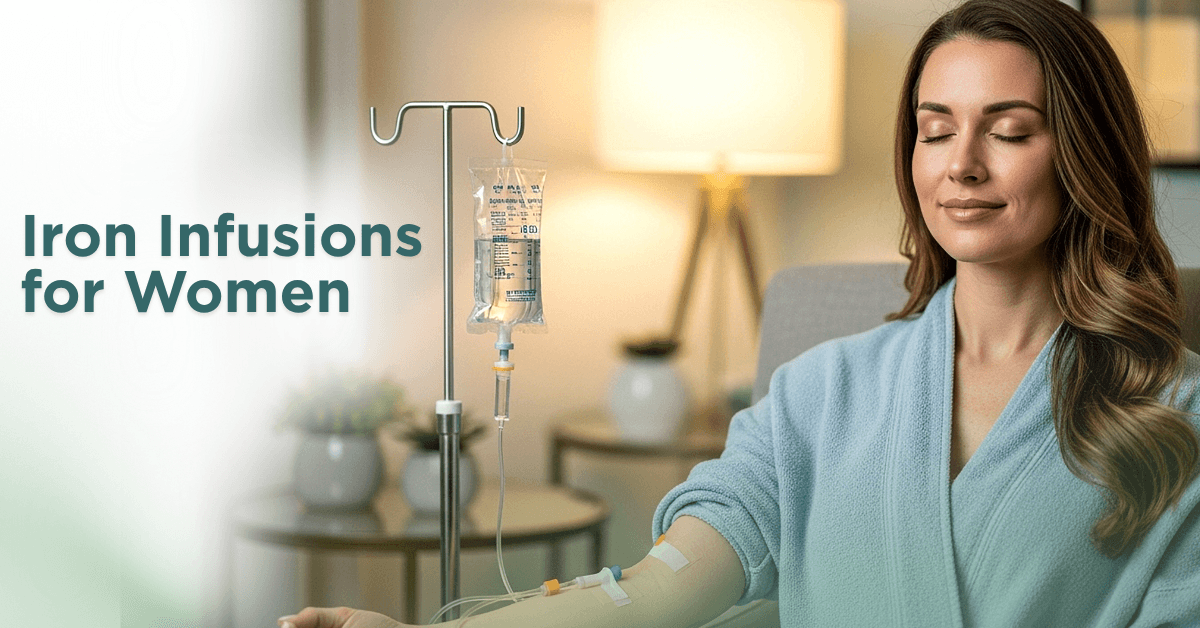
An iron infusion is a procedure in which iron is delivered directly into your bloodstream through an intravenous (IV) line. Because it bypasses the digestive system entirely, it allows iron to be absorbed quickly and efficiently.
The procedure is typically carried out in a clinical setting and takes between 15 minutes and several hours depending on the specific product used and the dose required. Your GP will discuss what to expect based on your individual treatment plan.
Iron infusions are not suitable for everyone and are generally considered when other treatment options have not been effective or are not appropriate. Your GP is the right person to assess whether an iron infusion may be a suitable option for you.
What to Expect Before, During, and After an Iron Infusion
Before your infusion: Your GP will review your blood test results and medical history to confirm the infusion is appropriate. You will be advised on any specific preparation required beforehand.
During the procedure: A small IV cannula is inserted into a vein, usually in your arm. The iron solution is then administered slowly. You will be monitored throughout the procedure by a healthcare professional.
After your infusion: Some women notice an improvement in their energy levels within a few days to weeks, though individual responses vary. Follow-up blood tests are typically arranged to monitor your iron levels and assess how well your body has responded.
Mild side effects such as temporary headache, nausea, or muscle aches can occur. Serious reactions are uncommon but possible, which is why the procedure is carried out in a supervised clinical environment. Your GP will explain what to watch for and when to seek further advice.
Frequently Asked Questions
How do I know if I need an iron infusion rather than oral supplements?
Your GP will assess your blood results, symptoms, and medical history to determine the most appropriate treatment for you. An infusion is generally considered when oral supplements have not been tolerated or have not been effective, or when iron levels need to be restored more quickly.
Is an iron infusion painful?
The insertion of the IV cannula may cause mild discomfort, similar to a standard blood test. The infusion itself is generally well tolerated. Our team will make every effort to keep you comfortable throughout.
How often would I need an iron infusion?
This depends entirely on your individual circumstances, the underlying cause of your iron deficiency, and how your body responds to treatment. Your GP will discuss a management plan suited to your needs.
Can iron deficiency come back after an infusion?
Yes, it can, particularly if the underlying cause has not been addressed. For example, women with heavy periods may continue to lose iron regularly. Your GP will work with you to identify and manage the contributing factors alongside treatment.
Is the appointment bulk billed at Botanic Ridge Doctors?
At Botanic Ridge Doctors, we are a 100% bulk billing clinic. This means there are no out-of-pocket costs for any of our patients. Call us on (03) 5902 8223 or visit botanicridgedoctors.com.au for details.
Don’t Keep Putting It Down to Being Busy
Persistent fatigue is not something you just have to put up with. If you have been feeling run down, flat, or short of breath for a while, it is worth getting your iron levels checked.
A simple blood test and a conversation with your GP could make a real difference to how you feel day to day.
This blog post is intended for general informational purposes only and does not constitute medical advice. Please consult with a qualified healthcare professional to discuss your individual health needs and circumstances.
References
- Australian Government Department of Health and Aged Care. Iron deficiency anaemia. Available at: https://www.health.gov.au
- Better Health Channel, Victoria. Iron deficiency anaemia. Available at: https://www.betterhealth.vic.gov.au/health/conditionsandtreatments/iron-deficiency-anaemia
- Healthdirect Australia. Iron deficiency. Available at: https://www.healthdirect.gov.au/iron-deficiency
- Royal Australian College of General Practitioners (RACGP). Iron deficiency in adults. Available at: https://www.racgp.org.au
- Gastroenterological Society of Australia (GESA). Iron deficiency anaemia guidelines. Available at: https://www.gesa.org.au
- Australian Prescriber. Iron deficiency and the role of intravenous iron. Available at: https://www.australianprescriber.com
- Therapeutic Goods Administration (TGA). Intravenous iron products registered in Australia. Available at: https://www.tga.gov.au