
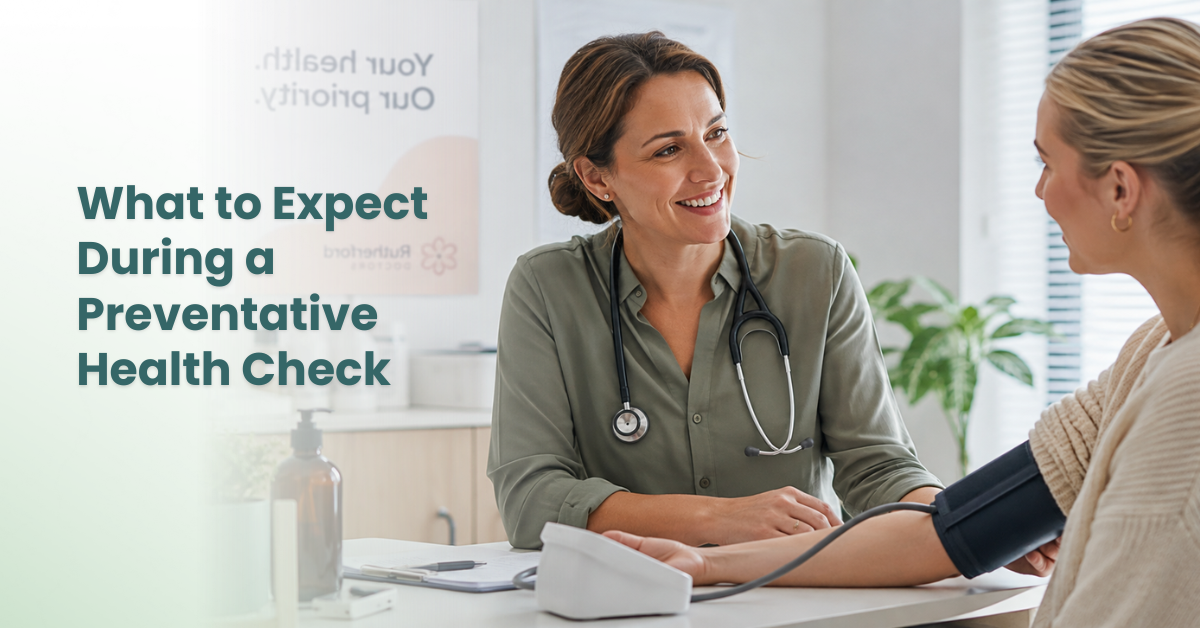
You don’t need to feel unwell to have a conversation with your GP about your health.
A preventive health checkup provides an opportunity to review aspects of your health that may not come up during appointments focused on a specific illness or injury. Depending on your age, medical history and individual risk factors, this might include discussing blood pressure, cardiovascular health, recommended cancer screening, vaccinations, lifestyle, and mental wellbeing.
However, there is no single “annual health screening” package that every adult needs.
Preventive healthcare in Australia is generally tailored to the individual. Rather than ordering every possible test, your GP can help determine which checks and screening programs are appropriate for you.
If you are considering an adult check up at Botanic Ridge Doctors, here’s what you may be able to expect.
What Is a preventive health checkup?
A preventive health checkup focuses on identifying health risks and keeping recommended preventive care up to date.
Unlike an appointment for a particular symptom, a preventive consultation may take a broader look at your current health and future risk.
Depending on your circumstances, your GP may discuss:
- Personal medical history
- Family medical history
- Current medicines
- Blood pressure
- Cardiovascular disease risk
- Diabetes risk
- Recommended cancer screening
- Vaccinations
- Smoking and alcohol
- Nutrition and physical activity
- Weight where clinically relevant
- Mental health and emotional wellbeing
- Sexual and reproductive health
- Sleep
- Other concerns relevant to your health
Not everyone needs every assessment on this list.
The Royal Australian College of General Practitioners (RACGP) provides evidence-based preventive healthcare recommendations based on factors such as age, risk and medical history. RACGP – Guidelines for Preventive Activities in General Practice
Do Adults Need a Full Check Up Every Year?
There is no universal recommendation that every healthy Australian adult undergo the same comprehensive set of tests every year.
How often you should see your GP for preventive healthcare depends on factors including:
- Your age
- Existing medical conditions
- Family history
- Previous test results
- Medicines
- Lifestyle
- Screening eligibility
- Individual risk factors
Some health measures may need regular monitoring, while other screening tests are recommended only at specific ages or intervals.
This is why an adult check up is best viewed as an individual health review rather than a standard annual testing package.
-
Your GP May Start With Your Medical History
A preventive appointment will often begin with a conversation.
Your GP may ask whether there have been changes in your:
- General health
- Medicines
- Family medical history
- Sleep
- Diet
- Physical activity
- Smoking or vaping
- Alcohol consumption
- Mental health
- Work or lifestyle
- Sexual or reproductive health
Your answers help your doctor determine which assessments may be appropriate.
For example, a family history of cardiovascular disease or certain cancers may influence recommendations for further assessment.
-
Your Blood Pressure May Be Checked
High blood pressure often causes no noticeable symptoms, which is why checking it can be an important part of preventive healthcare.
Blood pressure is measured using a cuff placed around your upper arm.
If your reading is higher than expected, one measurement alone may not be enough to diagnose hypertension. Your GP may recommend repeating measurements or monitoring outside the clinic before determining whether further management is needed.
Healthdirect notes that regular blood pressure checks can help identify hypertension, which can otherwise go unnoticed. Healthdirect Australia – High Blood Pressure
-
Your Cardiovascular Risk May Be Reviewed
Heart and blood vessel disease risk depends on more than one measurement.
Depending on your age and circumstances, your GP may consider factors such as:
- Blood pressure
- Cholesterol
- Smoking
- Diabetes
- Kidney health
- Family history
- Age
- Other relevant medical conditions
Australian guidelines recommend using an overall cardiovascular disease risk assessment for eligible adults rather than considering individual risk factors in isolation.
Depending on your risk, your GP may discuss lifestyle measures, further testing or treatment.
-
Blood Tests May Be Recommended — But Not Everyone Needs the Same Tests
A common misconception is that a preventive health checkup always involves a large panel of blood tests.
It doesn’t.
Your GP may recommend blood tests based on your age, medical history, symptoms, and risk factors.
These could include tests relating to:
- Cholesterol
- Blood glucose
- Kidney or liver function
- Blood count
- Other specific health concerns
Testing should have a clinical reason.
For example, diabetes screening may be appropriate for people with particular risk factors, while other blood tests may only be necessary when symptoms or medical history indicate them.
A preventive GP check is therefore about selecting appropriate tests rather than testing everything.
-
Your Diabetes Risk May Be Assessed
Type 2 diabetes can develop gradually, and some people have few or no symptoms initially.
Your GP may assess factors such as:
- Age
- Family history
- Previous gestational diabetes
- Cardiovascular health
- Blood pressure
- Weight and waist measurement where relevant
- Cultural or ethnic background
- Other medical conditions
If your risk is elevated, your doctor may recommend blood glucose testing.
Healthdirect provides information on type 2 diabetes risk factors, symptoms and diagnosis. Healthdirect Australia – Type 2 Diabetes
-
Your GP May Review Which Cancer Screening Programs Apply to You
Australia has national population-based screening programs for bowel, breast and cervical cancer.
Eligibility and recommended intervals differ between programs.
Bowel Cancer Screening
Eligible Australians can access bowel cancer screening through the National Bowel Cancer Screening Program.
The Australian Government currently offers eligible people aged 45 to 74 free bowel screening tests every two years. People aged 45 to 49 can opt in to receive their first kit, while eligible people aged 50 to 74 are sent kits automatically.
Australian Government – National Bowel Cancer Screening Program
Cervical Screening
Eligible women and people with a cervix aged 25 to 74 who have ever had sexual contact are generally recommended to have an HPV-based Cervical Screening Test every five years.
Self-collection is also available for eligible participants.
Australian Government – National Cervical Screening Program
Breast Screening
BreastScreen Australia provides free screening mammograms every two years, primarily targeting women aged 50 to 74. Women aged 40 to 49 and those aged 75 and over are also eligible for free screening.
Australian Government – BreastScreen Australia Program
If you have symptoms or an increased cancer risk, you may need an individual assessment rather than routine population screening.
-
Vaccinations Can Be Reviewed
Vaccination isn’t only for children.
Adults may require vaccinations or boosters depending on:
- Age
- Pregnancy
- Medical conditions
- Occupation
- Travel
- Previous vaccination history
- Other individual risk factors
Your GP can review your vaccination history against current Australian recommendations and discuss which vaccines may be appropriate.
Because vaccination recommendations can change, it is useful to check the current National Immunisation Program and Australian Immunisation Handbook rather than relying on an old vaccination record alone.
Australian Government – National Immunisation Program Schedule
-
Skin Health May Be Discussed
Australia has high levels of ultraviolet radiation, making skin awareness an important part of preventive healthcare.
You should become familiar with your skin and seek medical assessment if you notice:
- A new spot
- A changing mole
- Changes in size, shape or colour
- A lesion that repeatedly bleeds or crusts
- A sore that does not heal
- A spot that looks different from your other spots
Australia does not currently have a population-based skin cancer screening program for asymptomatic people.
Instead, professional skin assessment should be based on individual risk and concerning skin changes. Cancer Council recommends becoming familiar with your skin and seeing a doctor if you notice a new or changing spot.
Cancer Council Australia – Check for Signs of Skin Cancer
-
Mental Health Is Part of Preventive Healthcare Too
A health check does not need to focus solely on physical measurements.
Your GP may ask about:
- Stress
- Anxiety
- Low mood
- Sleep
- Work pressures
- Relationships
- Alcohol or substance use
- Emotional wellbeing
You can also raise these concerns yourself.
If mental health symptoms are affecting your everyday life, your GP can assess your needs and discuss appropriate support or treatment.
-
Lifestyle and Everyday Health May Be Discussed
Preventive healthcare also involves understanding factors that influence health over the longer term.
Your GP may discuss:
- Physical activity
- Nutrition
- Smoking and vaping
- Alcohol consumption
- Sleep
- Weight where clinically appropriate
The purpose should be to understand relevant health risks and discuss practical, evidence-based strategies appropriate to your circumstances.
It is not simply about receiving a list of things you “should” or “shouldn’t” do.
What Should You Bring to a Health Screening Appointment?
A little preparation can make your health screening appointment more useful.
Consider bringing:
- A list of your current medicines and supplements
- Details of significant family medical history
- Previous test results if they are not already available to the clinic
- Your vaccination history if available
- A list of health concerns or questions
- Information about any recent changes in symptoms
If you have several concerns to discuss, consider mentioning this when booking so the clinic can advise whether a longer appointment may be appropriate.
Will You Need a Physical Examination?
Possibly.
Your GP may perform a physical examination depending on your medical history, symptoms, and individual health risks.
This might involve:
- Blood pressure
- Heart rate
- Weight or waist measurement where relevant
- Heart and lung examination
- Skin examination
- Other targeted examinations
A comprehensive physical examination of everybody system is not automatically necessary for every healthy adult.
Your GP can determine what is clinically appropriate.
What Happens If Something Is Found?
An abnormal result does not necessarily mean you have a medical condition.
Depending on the finding, your GP may recommend:
- Repeating a measurement
- Blood or urine testing
- Imaging
- Lifestyle changes
- Medication where clinically appropriate
- Monitoring over time
- Referral to another healthcare professional
Preventive screening and diagnostic assessment are different. An abnormal screening result may indicate that further investigation is needed before a diagnosis can be made.
Can You Ask About a Specific Health Concern During the Appointment?
Yes.
A preventive appointment is a good opportunity to mention changes you have noticed.
For example:
- Persistent tiredness
- Changes in bowel habits
- Urinary symptoms
- Menstrual changes
- Sexual health concerns
- New skin lesions
- Sleep difficulties
- Mental health concerns
- Unexplained weight changes
- Persistent pain
However, symptoms may require a separate or longer consultation, particularly if several concerns need detailed assessment.
How Often Should You Have a preventive health checkup?
There is no universal schedule that applies to every adult.
Some people require more frequent medical reviews because of chronic conditions, medicines, or increased health risks. Others may need less frequent preventive consultations.
Individual screening tests also have their own recommended intervals.
Your GP can advise how frequently preventive reviews may be appropriate based on your age, medical history, and risk profile.
Ready to Take a Proactive Approach to Your Health?
You don’t need to be unwell to speak with a GP about your health. A preventive health check can help you review your individual risk factors, recommended screenings, vaccinations, lifestyle, and overall wellbeing.
At Botanic Ridge Doctors, our GPs can assess your personal health needs and help determine which preventive checks and screening programs may be appropriate for you.
Book an appointment with Botanic Ridge Doctors today to discuss your preventive health and take a proactive approach to your ongoing wellbeing.
FAQs
What happens during a preventive health checkup?
Your GP may review your medical and family history, blood pressure, cardiovascular and diabetes risk, vaccinations, lifestyle, mental health and eligibility for recommended screening programs. The exact assessment varies between individuals.
Does an adult check up always include blood tests?
No. Blood tests are recommended when there is a clinical reason based on factors such as your age, symptoms, medical history, and risk factors. A broad set of routine blood tests is not necessary for every healthy adult.
Do I need a health check every year?
Not necessarily. There is no single annual health-check schedule that applies to every Australian adult. The appropriate frequency depends on your individual health circumstances and recommended screening intervals.
Can I have a health check even if I feel well?
Yes. Preventive healthcare focuses on identifying relevant risk factors, keeping recommended screening and vaccinations up to date, and discussing ways to support your ongoing health.
What should I tell my GP during a check up?
Tell your GP about changes in your health, current medicines, family medical history, lifestyle, mental wellbeing and any symptoms or concerns you have noticed.
How long does a preventive health checkup take?
Appointment length depends on what needs to be assessed. If you have several health concerns or want a comprehensive discussion, ask Botanic Ridge Doctors when booking whether a longer appointment may be appropriate.
The Bottom Line
A preventive health checkup is not about completing every possible test once a year.
Instead, preventive healthcare involves reviewing the health risks, screening programs, vaccinations, and lifestyle factors that are relevant to you.
Depending on your age, medical history and individual circumstances, your GP check may include blood pressure measurement, cardiovascular and diabetes risk assessment, discussion of recommended cancer screening, vaccination review and conversations about physical and mental wellbeing.
If you’re considering an adult health check in Botanic Ridge, a GP at Botanic Ridge Doctors can review your individual circumstances and discuss which preventive health checkup may be appropriate for you.
References