
hearing health and why hearing tests are important
Noticing that conversations are becoming harder to follow, turning the television up more often, or frequently asking people to repeat themselves can be signs that it may be time to have your hearing assessed.
If you’re looking for information about Medicare Hearing services, one of the most common questions is: Does Medicare cover a hearing test?
The answer depends on your circumstances, the type of hearing assessment you need, and how you access the service. Medicare may provide rebates for certain audiology services when specific requirements are met, while some Australians may qualify for subsidised hearing services through the Australian Government Hearing Services Program.
Importantly, having a Medicare card does not automatically mean that a hearing test will be free or bulk billed. Understanding the difference between Medicare benefits and government-subsidised hearing services can help you know what to expect before booking an assessment.
In this guide, we’ll explain Medicare Hearing options, hearing test eligibility, referral requirements, bulk billing, and government support for patients in Botanic Ridge and surrounding areas.
What Is a Hearing Test?
A hearing test assesses how well you can hear different sounds and can help identify the type and degree of hearing loss. If you are exploring Medicare Hearing options, understanding what a hearing assessment involves can help you determine which type of service may be appropriate for your needs.
According to Healthdirect, hearing tests are commonly performed by audiologists and can assess how loud a sound needs to be before you can hear it. Different tests may also assess how sound travels through different parts of the ear.
Depending on your age, symptoms, and reason for assessment, an audiology test may include several different assessments to evaluate your hearing and identify possible hearing loss.
What Are the Signs You May Need a Hearing Test?
Hearing changes can develop gradually, which means they are not always immediately noticeable. Recognising potential symptoms early can help you seek appropriate medical or audiological advice and determine whether a Medicare Hearing service or another hearing assessment pathway may be suitable.
Consider discussing your hearing with a healthcare professional if you:
- Frequently ask people to repeat themselves
- Have difficulty understanding conversations
- Find it difficult to hear in restaurants or other noisy environments
- Turn the television or radio louder than other people prefer
- Have difficulty hearing on the telephone
- Feel that people are mumbling
- Notice that your hearing is different between your ears
- Experience persistent tinnitus
- Have family members commenting on your hearing
- Have been exposed to significant workplace or recreational noise
Healthdirect recommends seeing a healthcare professional if you are concerned about your hearing. An audiologist can perform hearing tests to assess possible hearing loss and help determine whether further assessment or treatment may be appropriate.
Does Medicare Cover Hearing Tests?
If you’re searching for Medicare Hearing coverage, it’s important to know that Medicare does not automatically cover every routine hearing test for every Australian.
Some audiology services can attract Medicare benefits when the relevant Medicare Benefits Schedule (MBS) requirements are met. Whether you can receive a Medicare rebate depends on several factors, including the type of hearing assessment, why the assessment is required, and whether the appropriate referral and eligibility requirements apply.
Your eligibility for a Medicare Hearing rebate may depend on:
- Why the hearing assessment is required
- The type of audiology service
- Whether the service has an applicable Medicare Benefits Schedule item
- Whether an appropriate referral is required
- Whether the audiologist or provider is eligible to provide the Medicare service
- Whether you meet the specific requirements of the relevant MBS item
This means having a Medicare card does not necessarily make a hearing test free. Before booking an appointment, it’s worth asking the provider whether the service is Medicare-eligible, whether you need a referral, and whether you will have any out-of-pocket costs.
Is a Medicare Hearing Test the Same as the Hearing Services Program?
No. Medicare Hearing services and the Australian Government Hearing Services Program are separate pathways, with different eligibility requirements.
The Australian Government Hearing Services Program provides subsidised hearing services and devices to eligible Australians with hearing loss. Depending on your eligibility and circumstances, the program may provide access to hearing assessments and other hearing services.
Healthdirect notes that eligible Australians may be able to receive a hearing test at no cost through the Hearing Services Program.
It is therefore important not to use “Medicare Hearing Test” and “Hearing Services Program” interchangeably. The Hearing Services Program is a separate Australian Government initiative with its own eligibility criteria and funding arrangements.
If you’re unsure which pathway applies to you, a GP or hearing healthcare provider can help you understand your options and whether you may be eligible for a Medicare rebate or government-subsidised hearing services.
Who May Be Eligible for the Hearing Services Program?
Eligibility for government-supported hearing services depends on your individual circumstances. While Medicare Hearing coverage and the Hearing Services Program are separate pathways, eligible Australians may be able to access subsidised hearing assessments, devices, and other hearing services through the program.
According to the Australian Government’s current eligibility information, categories that may qualify for support include certain:
- Pensioner Concession Card holders and their spouses
- Veteran Gold Card holders and their spouses
- Veteran White Card holders with hearing-specific conditions and their spouses
- Australian Defence Force members and reservists
- Eligible employment-service participants
- Aboriginal and Torres Strait Islander people aged 50 years or older
- People living in certain remote or very remote communities
There are also specific hearing support arrangements for eligible younger Australians.
Eligibility requirements can change and may include additional conditions, so it is important to check the current Australian Government criteria rather than assuming you qualify based on your age or Medicare eligibility alone.
Check Hearing Services Program eligibility
What About Hearing Services for People Under 26?
There are specific arrangements for younger Australians with hearing loss.
Current Australian Government information states that Australians under 26 with hearing loss may be eligible for fully subsidised hearing support and devices through the Community Service Obligations (CSO) component of the Hearing Services Program, delivered by Hearing Australia.
The appropriate pathway depends on the person’s age, hearing needs, and eligibility. If you’re unsure whether you qualify for government-supported hearing services or need to explore Medicare Hearing options, a GP or hearing healthcare provider can help you understand which pathway may be appropriate.
Do You Need a GP Referral for a Hearing Test?
Not every hearing test requires a GP referral. You can generally contact an audiologist directly to arrange a private hearing assessment.
However, if you are seeking a Medicare Hearing rebate through a particular Medicare Benefits Schedule pathway, a referral may be required. The requirements depend on the specific service and the Medicare item being claimed.
If you’re considering a hearing assessment and are unsure where to start, seeing your GP can be useful. Your GP can discuss your symptoms, examine your ears, and determine whether you may benefit from an audiology assessment, treatment, or another type of medical referral.
Before booking, ask the audiologist or healthcare provider whether a referral is required and whether the hearing assessment is eligible for a Medicare rebate.
Why Might Your GP Examine Your Ears First?
Not every hearing problem is caused by permanent hearing loss. Some changes in hearing can be associated with conditions affecting the ear that may require medical assessment or treatment.
Possible causes include:
- Earwax blockage
- Ear infections
- Fluid in the middle ear
- Eardrum problems
- Exposure to loud noise
- Certain medicines
- Age-related hearing changes
- Other conditions affecting the ear or auditory system
Your GP can ask about your symptoms and medical history and examine your ears to help identify possible causes of hearing changes.
Depending on the findings, your GP may recommend an audiology test, treatment for an underlying ear condition, or referral to another healthcare professional. This assessment can also help determine whether a particular Medicare Hearing pathway may be appropriate for your circumstances.
What Happens During an Audiology Test?
The exact tests performed during an audiology assessment depend on your age, symptoms, hearing concerns, and reason for the assessment. If you are exploring Medicare Hearing options, understanding what happens during a hearing test can help you prepare for your appointment.
Healthdirect explains that hearing tests assess how well you can hear different sounds and can help determine the type and severity of hearing loss.
During your appointment, the audiologist may ask about:
- Your hearing concerns
- When you first noticed changes in your hearing
- Whether one or both ears are affected
- Tinnitus or ringing in the ears
- Dizziness or balance problems
- Previous or recurring ear infections
- Workplace or recreational noise exposure
- Family history of hearing loss
- Medicines you are taking
- Previous hearing problems or assessments
The audiologist may then perform different hearing tests depending on what needs to be assessed. The results can help determine whether hearing loss is present and whether further medical assessment or hearing support may be appropriate.
What Is Pure-Tone Audiometry?
Pure-tone audiometry is a commonly used hearing assessment that measures how well you can hear sounds at different frequencies and volumes.
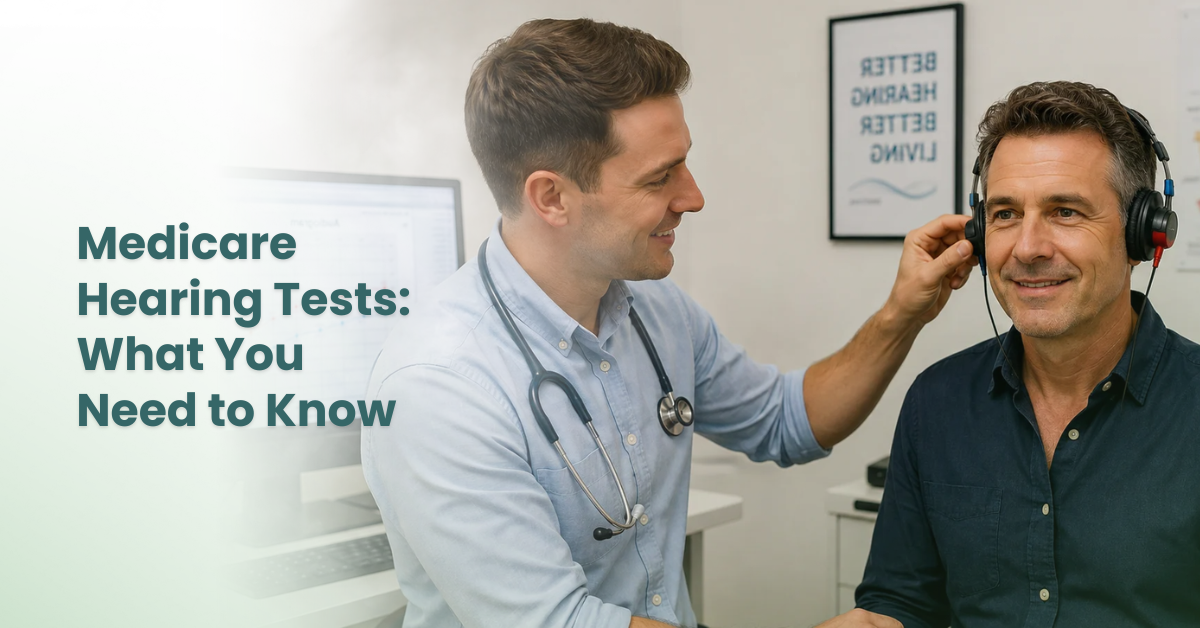
During the test, you usually wear headphones and respond when you hear a sound. The sounds may vary in pitch and loudness, allowing the audiologist to identify the quietest sounds you can hear at different frequencies.
The results are recorded on an audiogram, which provides a visual representation of your hearing ability across different frequencies.
The audiologist can use the audiogram to assess whether hearing loss is present and, if so, understand its pattern and severity. This information can help guide the next steps, including whether further assessment, treatment, or appropriate Medicare Hearing or government-supported hearing services should be considered.
Are Hearing Tests Painful?
Most routine hearing tests are non-invasive and should not be painful. During a hearing assessment, you may need to wear headphones or other equipment while responding to different sounds.
If you have ear pain, discharge, or significant discomfort before your assessment, let your GP or audiologist know. These symptoms may require medical evaluation before or alongside a hearing test.
What Does “Bulk Billing Hearing Test” Mean?
If you’re researching Medicare Hearing costs, you may come across the term “bulk billing hearing test.” Bulk billing means a healthcare provider accepts the applicable Medicare benefit as full payment for an eligible Medicare service, so the patient does not pay a gap for that service.
However, a hearing test is only able to be bulk billed when:
- The service qualifies for a Medicare benefit.
- The relevant Medicare requirements are satisfied.
- The provider chooses to bulk bill that particular service.
Having a Medicare card does not guarantee that an audiology appointment will be bulk billed. Depending on the service and provider, you may instead be charged a private fee or an out-of-pocket gap payment.
Before booking a hearing assessment, consider asking:
- Is this service eligible for a Medicare rebate?
- Do I need a GP referral?
- Do you bulk bill this particular hearing test?
- Will there be an out-of-pocket fee or gap payment?
- What will the hearing assessment include?
Confirming these details in advance can help you understand your Medicare Hearing options and avoid unexpected costs.
What Is the Australian Government Hearing Services Program?
The Australian Government Hearing Services Program is separate from standard Medicare arrangements. While Medicare Hearing services may provide benefits for certain eligible audiology services, the Hearing Services Program provides subsidised hearing services and devices to eligible Australians with hearing loss.
In 2024–25, more than 834,000 Australians received support through the Hearing Services Program.
Depending on your eligibility and clinical needs, hearing services and devices may be fully or partially subsidised. The program also has specific requirements that providers must follow when delivering and claiming services and devices for eligible clients.
If you’re unsure whether you qualify, check the current Australian Government eligibility requirements before assuming that Medicare or the Hearing Services Program will cover your hearing assessment or devices.
Does Government Support Mean Hearing Aids Are Always Free?
No. Being eligible for government-supported hearing services does not automatically mean that every hearing aid, device, or related service will be completely free.
Under the Hearing Services Program, eligible clients may have access to fully subsidised hearing devices when the relevant program and clinical requirements are met. Other hearing devices or services may be partially subsidised and could involve additional costs.
Eligible clients should be informed about appropriate fully subsidised options where these are available before purchasing private hearing services or devices.
Before agreeing to a hearing aid or other service, ask your provider to explain:
- What services and devices are covered
- Which options are fully subsidised
- Which options involve additional costs
- Whether there are ongoing service or maintenance fees
- What you would need to pay out of pocket
Understanding these costs can help you compare your Medicare Hearing options with other government-supported hearing services and make an informed decision about your care.
When Should You Speak with a GP About Hearing Changes?
Consider booking a GP appointment if you notice persistent changes in your hearing or are unsure what may be causing them. Your GP can assess your symptoms, examine your ears, and help determine whether you need a hearing test, treatment, or referral to an audiologist.
A medical assessment can be particularly important if hearing changes occur with:
- Ear pain
- Ear discharge
- Persistent tinnitus
- Dizziness or balance problems
- Repeated ear infections
- A feeling that your ear is blocked
- A significant difference in hearing between your ears
Your GP can help identify possible causes of your symptoms and recommend the next appropriate step. If an audiology assessment is needed, they can also discuss whether a referral may be relevant to your Medicare Hearing options.
Sudden Hearing Loss Is an Emergency
Gradual hearing changes and sudden hearing loss should not be treated in the same way. Sudden hearing loss requires urgent medical attention and should not be treated as a routine hearing concern.
It may feel as though one ear has suddenly become blocked, or that your hearing has abruptly disappeared. Seek urgent medical care if you experience sudden hearing loss, particularly when it occurs with:
- Dizziness
- Tinnitus
- Ear pain
- Facial weakness or numbness
- Hearing loss after a head injury
- Hearing loss following significant loud-noise exposure
Do not wait for a routine hearing test or audiology appointment if your hearing has suddenly deteriorated. Prompt medical assessment is important because some causes of sudden hearing loss require urgent treatment.
Concerned About Your Hearing? Talk to Our Team
If you’re experiencing hearing changes, struggling to follow conversations, or wondering whether you may be eligible for a Medicare hearing test or rebate, speaking with a GP can help you understand the right next step.
At Botanic Ridge Doctors, our GPs can assess your hearing concerns, examine your ears, discuss whether a referral is appropriate, and help you understand your available options. Our clinic also has onsite audiology services for hearing assessments and tinnitus management.
Book an appointment with Botanic Ridge Doctors today to discuss your hearing concerns and find the right pathway for your needs.
FAQs
Does Medicare pay for hearing tests?
Medicare benefits may be available for certain audiology services when the relevant eligibility and referral requirements are met. Not every hearing test is automatically covered simply because you have a Medicare card.
Can I get a free hearing test with Medicare?
It depends on the service and your eligibility. A provider may bulk bill an eligible Medicare service, but providers are not required to bulk bill. Separately, eligible Australians may receive subsidised hearing services through the Australian Government Hearing Services Program.
Do I need a GP referral for an audiology test?
Not necessarily for a private hearing test. However, certain Medicare-supported audiology services require relevant referral arrangements. Check with your GP or audiology provider before booking if you intend to claim a Medicare benefit.
Can my GP check my hearing?
A GP can discuss hearing symptoms, review your medical history, and examine your ears for potential causes of hearing changes. If further assessment is needed, your GP may recommend an audiology assessment or another appropriate referral.
What is the difference between Medicare and the Hearing Services Program?
Medicare provides benefits for eligible healthcare services under the Medicare Benefits Schedule. The Hearing Services Program is a separate Australian Government program providing subsidised hearing services and devices to eligible Australians with hearing loss.
Is a bulk billing hearing test guaranteed?
No. Even when an audiology service is Medicare-eligible, whether it is bulk billed depends on the provider. Always ask about Medicare eligibility and potential out-of-pocket costs before your appointment.
The Bottom Line
If you’ve noticed changes in your hearing, an assessment can help determine whether hearing loss is present and what may be contributing to it.
Whether you can access a Medicare hearing test or another subsidised service depends on your circumstances. Some audiology services may attract Medicare benefits when specific requirements are met, while eligible Australians may receive hearing services through the separate Australian Government Hearing Services Program.
Importantly, Medicare eligibility does not automatically mean an appointment will be bulk billed.
If you’re experiencing hearing changes in Botanic Ridge or surrounding areas, a GP at Botanic Ridge Doctors can assess your symptoms and discuss whether an audiology assessment or other referral may be appropriate.
For sudden hearing loss, seek urgent medical attention rather than waiting for a routine appointment.