
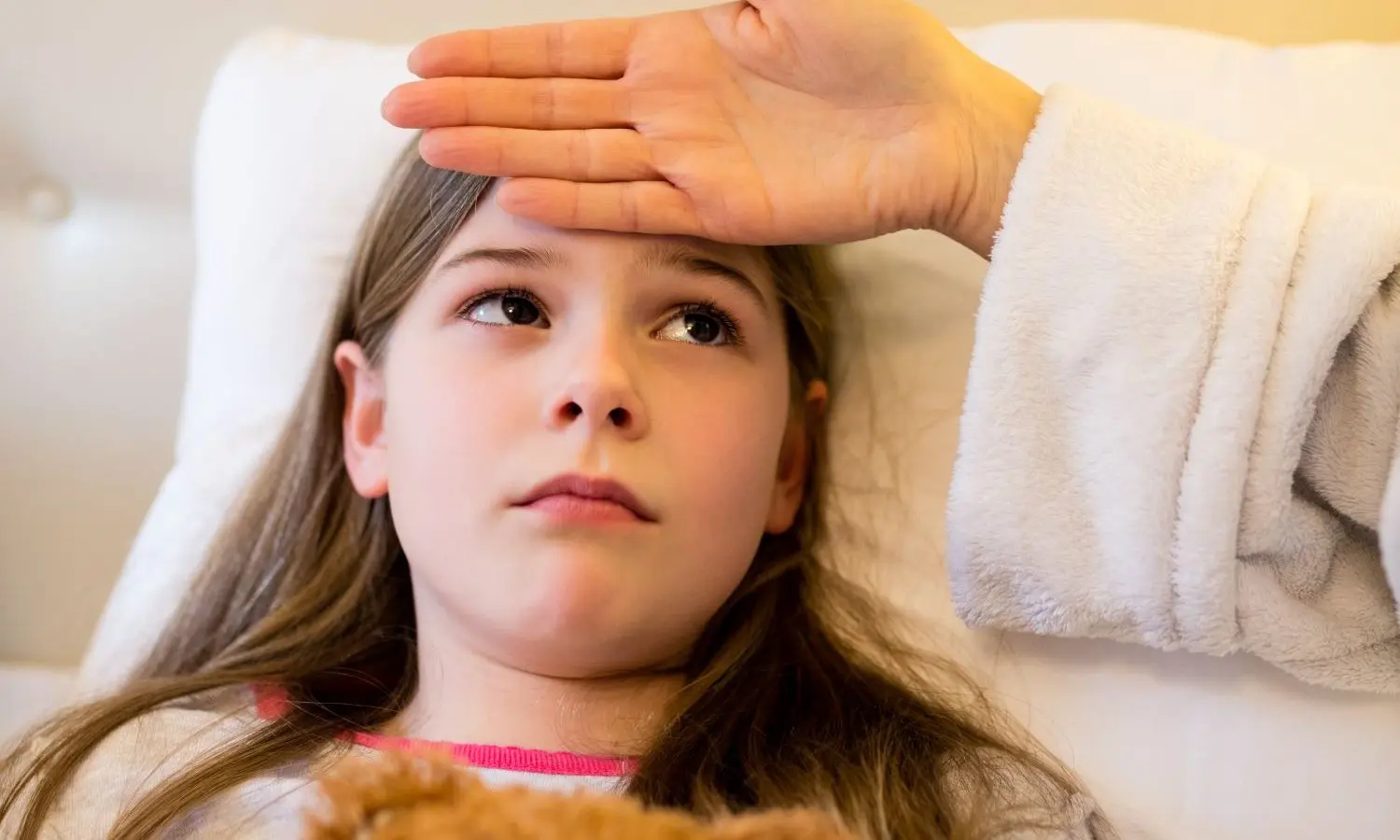
A paediatric fever is usually caused by an infection, and many children recover with rest, fluids and supportive care. However, a temperature of 38°C or higher in a baby under three months requires urgent medical assessment, while breathing difficulties, difficulty waking, a first seizure or a rash that does not fade when pressed are emergency warning signs.
Knowing how to recognise a paediatric fever, monitor your child’s behaviour and identify concerning symptoms can help you decide when to provide care at home, contact your GP or seek emergency medical attention.
What Is Considered a Paediatric Fever?
A paediatric fever is generally defined as a body temperature of 38°C or higher. Fever is a symptom rather than an illness itself and commonly occurs when the immune system responds to an infection.
Common causes of paediatric fever include:
- Common colds and other viral respiratory infections.
- Influenza (flu).
- Ear infections.
- Viral gastroenteritis.
- COVID-19.
- Hand, foot and mouth disease.
- Tonsillitis and other throat infections.
Many children with a paediatric fever remain alert and responsive, while others may become tired, irritable or uncomfortable. The underlying cause, your child’s age and their overall condition help determine whether medical assessment is needed.
How Important Is the Temperature Reading?
The temperature reading is only one part of assessing a paediatric fever. A child’s breathing, alertness, hydration, behaviour and other symptoms can be more important indicators of how unwell they are.
For example, a child with a high temperature who drinks fluids and responds normally may be less concerning than a child with a lower temperature who is difficult to wake or struggling to breathe. This does not mean a high fever should be ignored; a temperature above 40°C warrants prompt medical assessment.
Use a digital thermometer according to its instructions rather than relying only on how warm your child’s forehead feels. If you are unsure how to interpret a reading or your child appears unwell, seek medical advice.
How Can You Care for a Child With a Fever at Home?
Many children with a mild paediatric fever can be cared for at home if they are breathing comfortably, drinking adequately and remaining responsive. The aim is to keep your child comfortable, maintain hydration and monitor for any signs of worsening illness.
Helpful measures include:
- Offer regular fluids appropriate for your child’s age.
- Continue breastfeeding or formula feeding for infants.
- Dress your child in light, comfortable clothing.
- Keep the room at a comfortable temperature.
- Allow rest and check on your child regularly.
- Offer age-appropriate pain relief if needed, following the product instructions and advice from a doctor or pharmacist.
Do not use ice baths, cold baths or alcohol rubs to reduce a paediatric fever. These approaches can cause discomfort and are not recommended.
Fever-reducing medicines can help relieve discomfort, but they do not treat the underlying cause of the fever and do not reliably prevent febrile seizures. Check with a healthcare professional if you are unsure which medicine is suitable for your child’s age or circumstances. For more information about children’s nutrition and development, read our guide to supporting healthy growth in children.
When Should You Contact Your GP About a Paediatric Fever?
Contact your GP promptly if your child’s paediatric fever persists, their condition worsens or additional symptoms develop. A fever lasting more than two days deserves medical advice, and you should seek help sooner if your child appears increasingly unwell or you are concerned.
Arrange medical assessment if your child:
- Has a fever lasting more than two days or is not improving.
- Has recurring fevers without an obvious explanation.
- Is unusually irritable, lethargic or difficult to comfort.
- Drinks poorly or passes urine less often than usual.
- Has persistent ear pain, a sore throat or abdominal pain.
- Develops a new rash.
- Has ongoing vomiting or diarrhoea.
- Has a chronic medical condition or weakened immune system.
Important: A baby under three months with a temperature of 38°C or higher needs urgent medical assessment at a hospital emergency department. Do not wait to see whether the fever improves at home.
Your GP can assess your child’s symptoms and determine whether further examination, testing or treatment is necessary.
When Is a Child’s Fever an Emergency?
A paediatric fever accompanied by serious warning signs requires emergency medical attention. Call Triple Zero (000) for an ambulance if your child has difficulty breathing, is unresponsive or very difficult to wake, has a first seizure, or develops a rash that does not fade when pressed.
Seek emergency help if your child:
- Has difficulty breathing or blue lips.
- Is unresponsive or cannot be woken normally.
- Has a first seizure or a seizure lasting longer than five minutes.
- Has a stiff neck with other concerning symptoms.
- Develops a non-blanching rash, meaning the spots do not fade when pressed.
- Has pale, mottled or blue skin and appears seriously unwell.
- Shows signs of severe dehydration or rapidly deteriorating health.
Do not delay emergency care to take another temperature reading or wait for fever-reducing medicine to work. If your child is under three months old and has a fever of 38°C or higher, go to the nearest emergency department immediately.
What Should You Know About Febrile Seizures?
A febrile seizure is a seizure associated with fever that can occur in some young children, commonly between six months and six years of age. Although it can be frightening to witness, most febrile seizures are brief and children usually recover without long-term problems.
If your child has a seizure:
- Stay with them and move nearby hazards away.
- Place them on their side on a safe surface when possible.
- Do not restrain their movements or put anything in their mouth.
- Time the seizure.
- Call 000 if it is their first seizure, lasts longer than five minutes, affects their breathing or they do not recover normally.
A child should receive medical assessment after a seizure associated with fever. Fever-reducing medicines do not reliably prevent another febrile seizure.
Should You Wake a Sleeping Child With a Fever?
You generally do not need to wake a comfortably sleeping child solely to check their temperature or give fever medicine. Rest can help recovery, but you should continue to check that your child is breathing comfortably and can be roused and responds normally.
If your child is unusually difficult to wake, confused, floppy or not responding as usual, seek emergency medical attention. This is more concerning than ordinary tiredness during a paediatric fever.
Can You Prevent a Paediatric Fever?
Not every paediatric fever can be prevented because many different infections can cause it. However, routine childhood vaccinations, good hand hygiene and sensible infection-control habits can reduce the risk of some illnesses.
Helpful habits include:
- Keeping routine childhood vaccinations up to date.
- Encouraging regular handwashing.
- Teaching children to cover coughs and sneezes.
- Keeping children home when they are too unwell to participate in school or childcare.
- Supporting healthy sleep, nutrition and physical activity.
Vaccination helps protect against several infections that can cause fever and serious illness. Ask your GP about recommended vaccinations for your child’s age and circumstances. Regular check-ups can also support your child’s ongoing wellbeing. Read more about preventive paediatric care.
When Should You Arrange a Medical Assessment at Botanic Ridge Doctors?
If your child has a paediatric fever and you are unsure what to do, a GP can assess their symptoms and explain the next steps. For non-emergency concerns, contact Botanic Ridge Doctors to discuss appointment availability and whether an in-person assessment is appropriate.
Botanic Ridge Doctors
T17 & 18, 10 Hummingbird Drive, Botanic Ridge VIC 3977
Phone: (03) 5902 8223
Email: info@botanicridgedoctors.com.au
The practice advertises bulk billing for eligible Medicare patients. Confirm the billing arrangements when booking.
If your child has any emergency warning signs, do not wait for a GP appointment. Call 000 or go to the nearest emergency department as appropriate.
The Bottom Line
A paediatric fever is often associated with a common infection, but your child’s age, behaviour, breathing and hydration are essential when deciding what to do. Many older children who remain alert, drink adequately and breathe comfortably can be monitored at home, provided you watch for worsening symptoms.
Seek urgent assessment for any baby under three months with a temperature of 38°C or higher, and call 000 for emergency warning signs such as breathing difficulties, unresponsiveness or a first seizure. If you are unsure about your child’s condition, seek professional medical advice.
FAQs
What temperature is considered a paediatric fever?
A paediatric fever is generally defined as a body temperature of 38°C or higher. The child’s age, behaviour, hydration and other symptoms help determine how urgently they need medical assessment.
When should I take my child to the hospital for a fever?
Seek emergency care if your child has difficulty breathing, is unresponsive or difficult to wake, has a first seizure, or develops a rash that does not fade when pressed. A baby under three months with a temperature of 38°C or higher should be taken to a hospital emergency department immediately.
Is a high fever always dangerous in children?
Not necessarily. Many childhood fevers are caused by common infections, but a high temperature still needs to be considered alongside the child’s age, symptoms and overall condition. Seek prompt medical advice if the temperature exceeds 40°C or your child appears unwell.
How long can a child’s fever last before I contact a GP?
Contact your GP if a fever lasts more than two days, your child is not improving or you are concerned about their condition. Seek help sooner if new symptoms develop or your child becomes increasingly unwell.
Can I give my child medicine to reduce a fever?
Age-appropriate paracetamol or ibuprofen may help relieve discomfort when suitable for the child. Follow the product instructions and ask a doctor or pharmacist if you are unsure about the medicine or dose. Fever-reducing medicines do not reliably prevent febrile seizures.
Should I wake my child when they have a fever?
You generally do not need to wake a comfortably sleeping child solely to check their temperature or give fever medicine. However, a child who is unusually difficult to wake or does not respond normally needs urgent medical assessment.
What should I do if my child has a febrile seizure?
Keep your child safe, place them on their side when possible, do not restrain them or put anything in their mouth, and time the seizure. Call 000 if it is their first seizure, lasts longer than five minutes, affects breathing or your child does not recover normally.
Can a paediatric fever be treated at home?
Many older children with mild fever can be cared for at home if they are drinking adequately, breathing comfortably and remaining responsive. Babies under three months with a temperature of 38°C or higher need urgent hospital assessment, and emergency warning signs require immediate medical attention.
References
Royal Children’s Hospital Melbourne. Kids Health Info – Fever in Children. https://www.rch.org.au/kidsinfo/fact_sheets/Fever_in_children/
Healthdirect Australia. Fever in Children. https://www.healthdirect.gov.au/fever-in-children
Raising Children Network Australia. Fever in Babies and Children. https://raisingchildren.net.au
Better Health Channel Victoria. Fever in Children. https://www.betterhealth.vic.gov.au
Royal Australian College of General Practitioners (RACGP). Management of Fever in Children in General Practice. https://www.racgp.org.au
Australian Government Department of Health, Disability and Ageing. National Immunisation Program. https://www.health.gov.au